Workspace governance
Engage separates workspace governance from environment messaging operations.
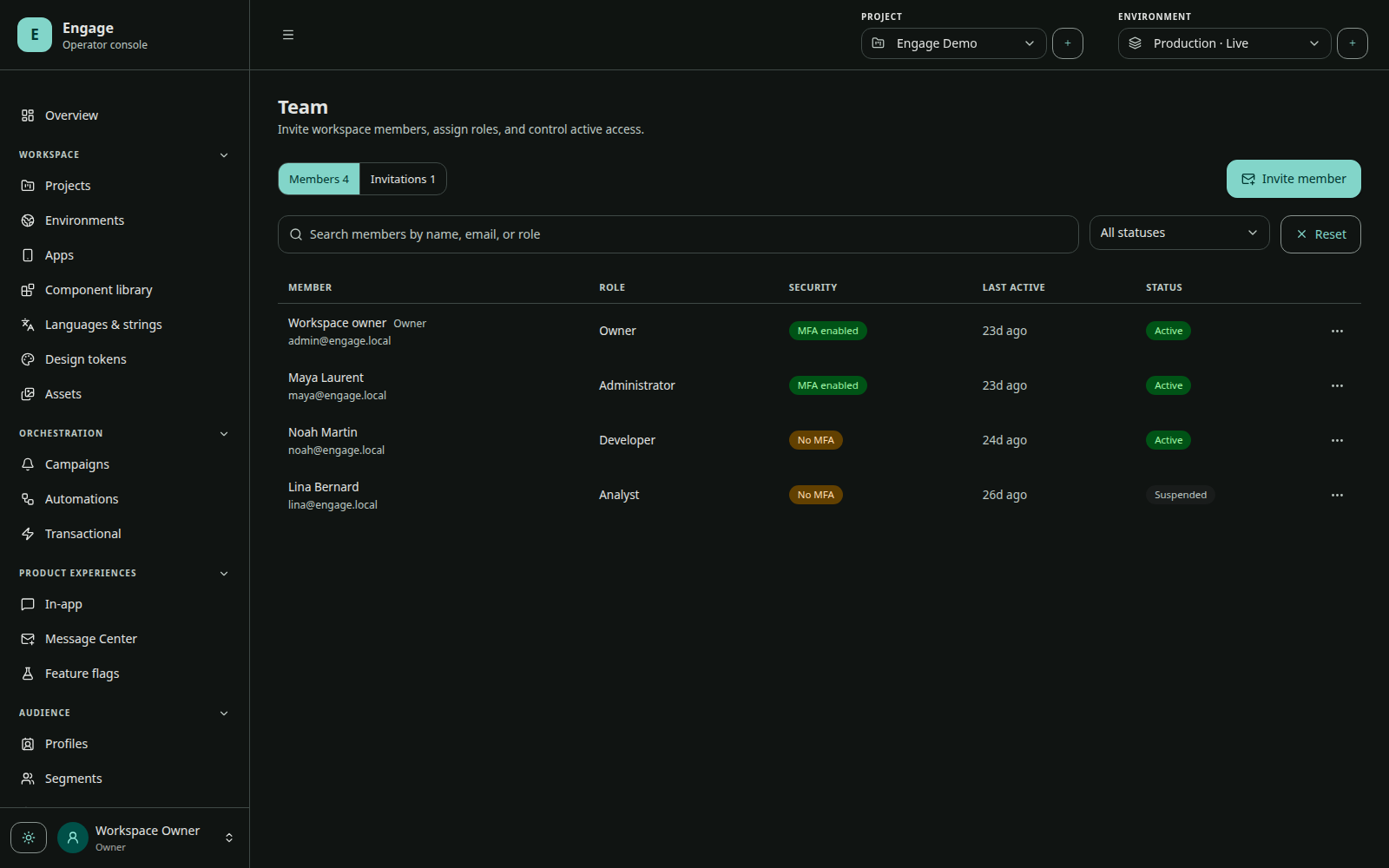
Roles and permissions
Grant permissions by job responsibility. Important boundaries include read versus edit, publish/send, integrations management, analytics/export access, privacy operations, security/team administration, audit, and billing.
Do not use shared administrator accounts. Identity, MFA/OIDC settings, session security, and role assignment should identify the operator responsible for each change.
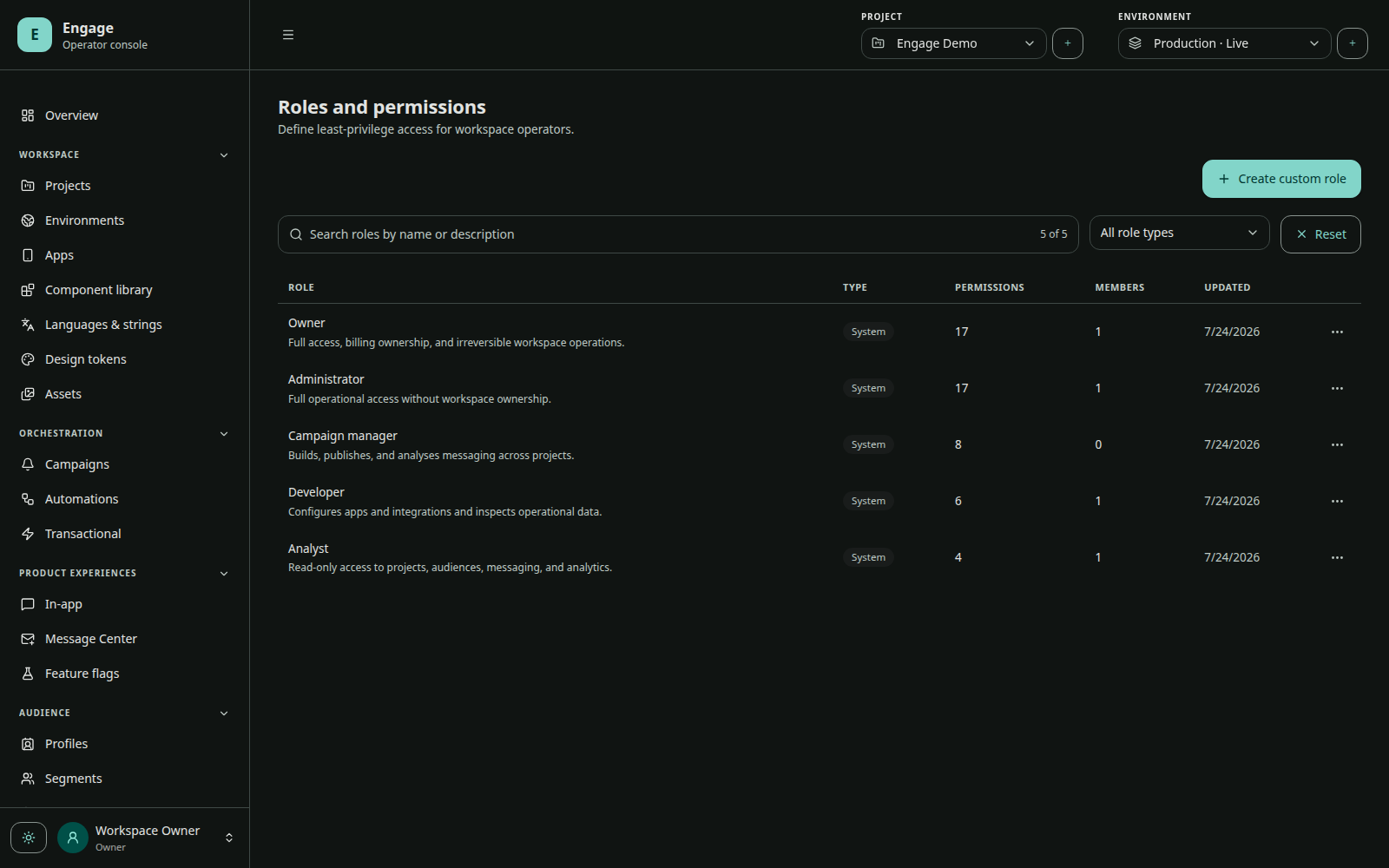
Audit
Audit records support investigation of access, environment/app changes, credential management, content publication, sends, automation lifecycle, privacy actions, exports, retention, billing, and security changes. Keep actor, timestamp, resource, action, and safe metadata; never store plaintext secrets in audit details.
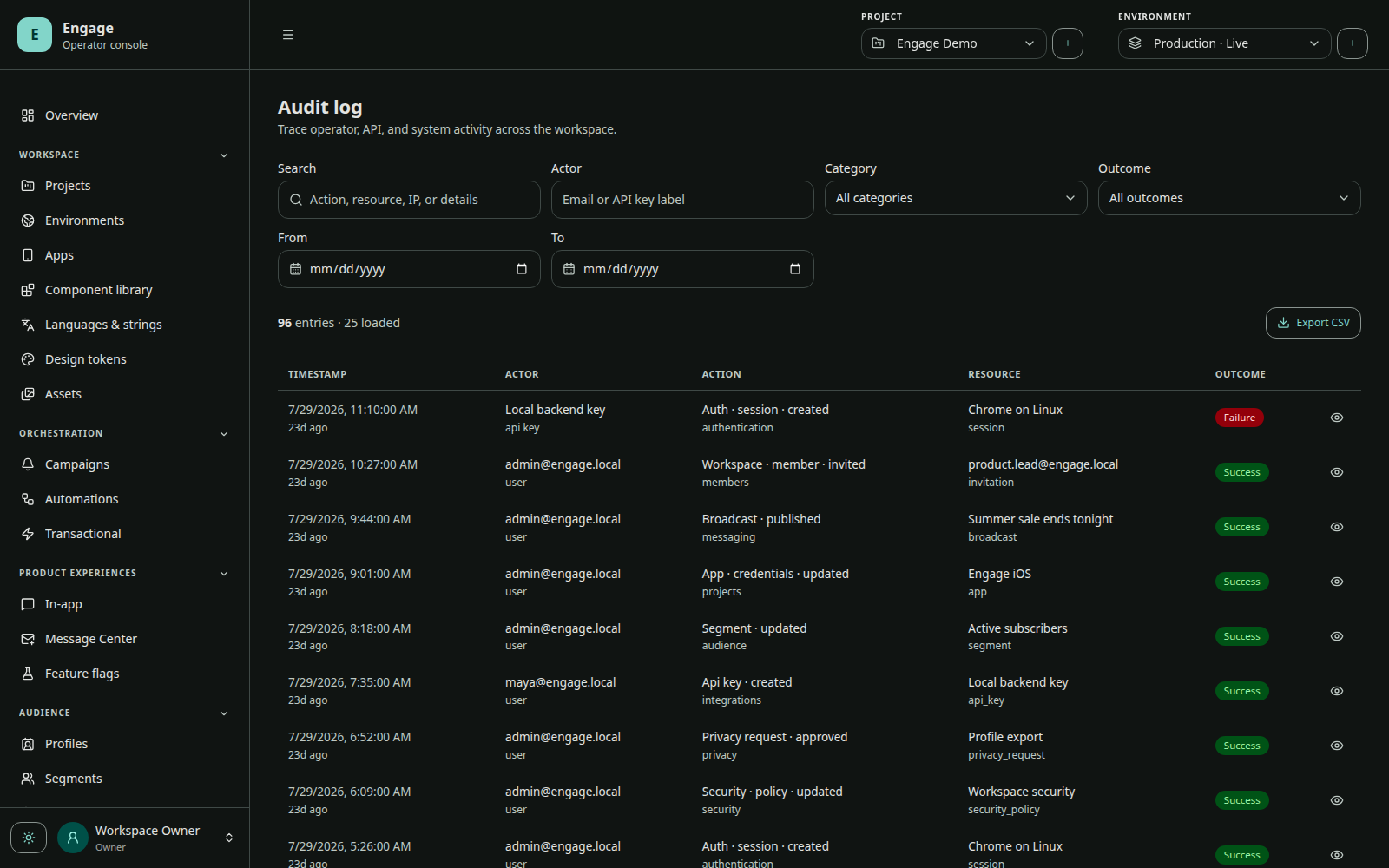
Usage and quotas
Environment usage includes API requests, audience/event processing, sends/deliveries, automation work, media, exports, and other metered capabilities. Surface warning and blocked states before an operation fails unexpectedly.
Billing
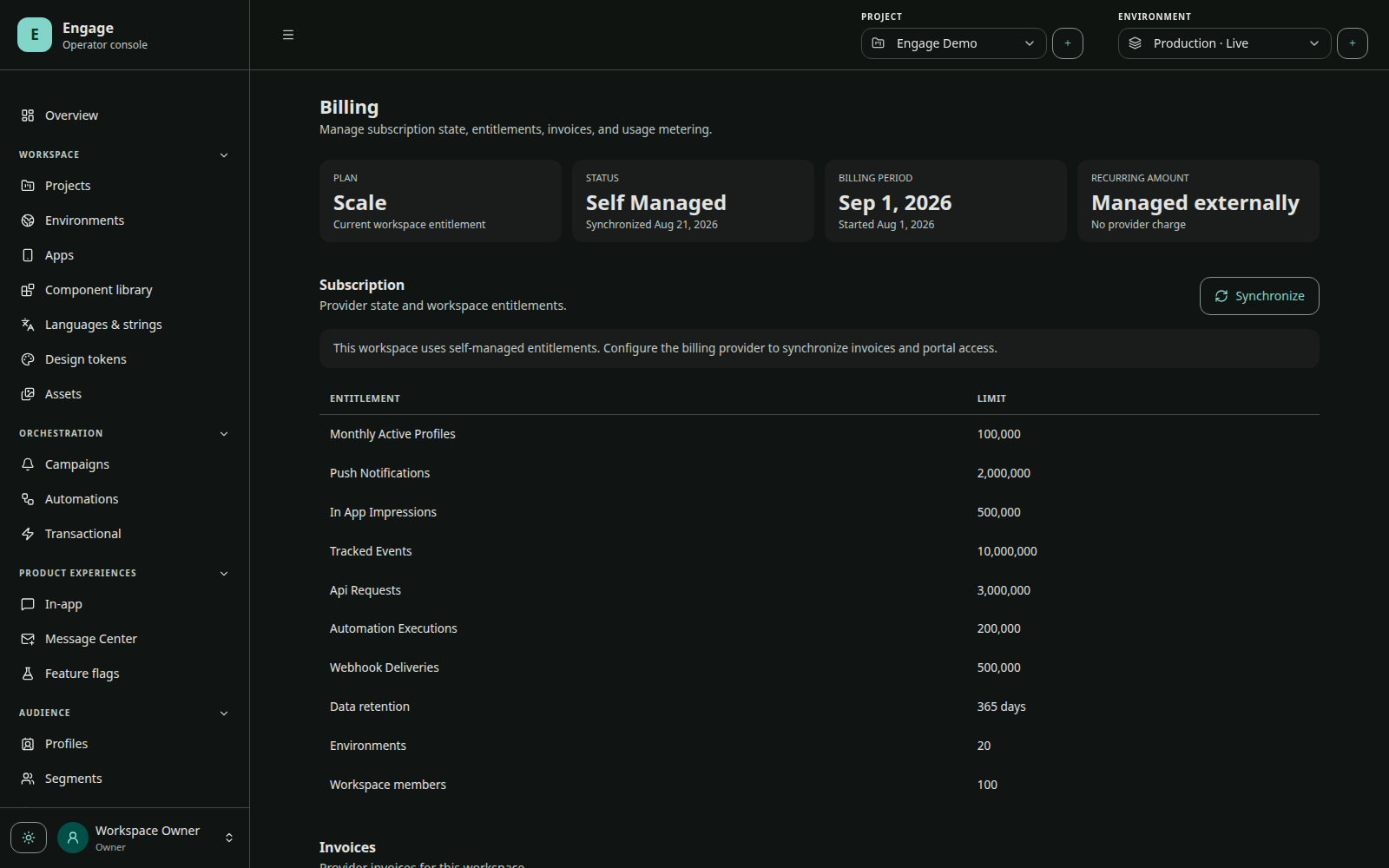
Workspace billing may use the configured provider or self-managed mode. Plan entitlements and quotas gate product operations; billing webhooks and provider calls are idempotent. Restrict billing access separately from messaging permissions.
Retention
Retention policy applies to profiles/events, delivery diagnostics, webhook attempts, exports, analytics facts, and audit according to product/legal requirements. Short retention can reduce investigation depth; excessive retention increases privacy exposure.
Production readiness
- Configure OIDC/MFA/team roles.
- Set production secret encryption keys.
- Create least-privilege access keys and webhook secrets.
- Validate provider credentials and worker health.
- Define quotas, alert ownership, retention, and privacy process.
- Verify audit visibility and billing state.
- Exercise incident rotation/revocation before launch.